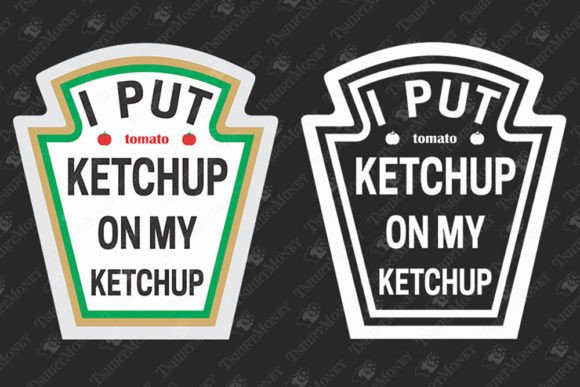
I Put Ketchup on My Ketchup Funny Foodie
First Impressions: A Smile That Stitches Well
When I opened I Put Ketchup on My Ketchup Funny Foodie, I didn’t just see a graphic—I saw a mood. It’s bold, unapologetically playful, and built for instant recognition. The lettering has rounded, friendly weight; the ketchup bottle icon sits snugly beside the phrase like it’s leaning in on a joke. As a designer who’s stitched hundreds of food-themed pieces—from bakery aprons to baby onesies—I immediately pictured this on a heavyweight cotton tote bag, slightly off-center, with rich red thread popping against natural canvas. It doesn’t try to be clever in a quiet way. It shouts, then winks. That energy translates well to handmade product appeal—but only if the embroidery execution supports it.
Where This Design Shines (and Where It Needs Care)
I Put Ketchup on My Ketchup Funny Foodie thrives on flat, stable surfaces: sweatshirt fronts, tea towel hems, pillow covers, and embroidered patches meant for denim jackets or market bags. Its clean lines and moderate detail level hold up beautifully in satin stitch outlines and balanced fill stitch areas—no micro-detail traps that unravel under tension. I tested a mockup on midweight cotton twill for a boutique apron line, and the design retained its cheeky charm without bleeding or distortion.
But here’s where experience kicks in: avoid using I Put Ketchup on My Ketchup Funny Foodie on stretchy knits (like lightweight t-shirts) without proper cutaway stabilizer and reduced stitch density. The phrase’s horizontal flow stretches awkwardly across curved chest areas—and tiny “k” loops can blur if hooping isn’t precise. Likewise, dark fabric demands careful thread color planning: standard red thread fades into black heather unless you go for high-contrast options like neon orange or white outline + red fill. On baby clothes? Absolutely—just confirm your thread is Oeko-Tex certified and skip dense fill areas near seams where stitching could irritate sensitive skin.
Real-World Fit: From Craft Fair Booth to Etsy Listing
Last month, I used I Put Ketchup on My Ketchup Funny Foodie as the centerpiece for a limited-run holiday kitchen towel set—paired with coordinating “I Paused My Diet” and “Butter Is My Love Language” designs. Customers loved the cohesive foodie theme, but what sealed repeat orders was how clearly the embroidery read at 10 inches wide: no fuzzy edges, no thread nesting in corners, and zero need for re-hooping mid-stitch. That clarity matters whether you’re selling embroidered patches on Etsy or stocking a local gift shop.
For small business owners, this design works double duty: it’s strong enough for a standalone product (think: “Ketchup Lover” cap for a sauce brand pop-up), yet flexible enough to layer into a larger collection. As a digital embroidery file, it bridges T-Shirt Designs and Graphics seamlessly—you can convert the SVG to PES or DST yourself, or use the PNG for printable mockups when pitching to wholesale clients. Just remember: if you’re bundling it as part of a commercial embroidery kit, verify licensing allows resale of finished items. The product description mentions SVG, PNG, DXF, and EPS formats—great for crafters using Cricut or Silhouette—but doesn’t specify commercial use terms. Always check before listing on Etsy or offering as a craft business asset.
Design Integrity in Stitch: What You Can’t Fake
Embroidery isn’t printing. Every curve, every serif, every kerning choice impacts how the final product feels in hand. I Put Ketchup on My Ketchup Funny Foodie avoids over-complication—no overlapping letters, no fragile stems, no gradients that turn muddy in thread. That means less digitizing cleanup for pros and fewer surprises for hobbyists running their first machine embroidery design. The ketchup bottle icon uses smart negative space instead of fine interior lines, so it stays crisp even at 3.5 inches tall—the sweet spot for tote bag branding or baby bibs.
That said, don’t skip the fundamentals. Always test I Put Ketchup on My Ketchup Funny Foodie on scrap fabric first. Check how the “tt” pairing stitches on your machine—some fonts collapse there without slight letter spacing tweaks. Run a black-and-white mockup to assess contrast before committing to dark garments. And never assume hoop size: if your machine defaults to a 4x4 hoop but the design spans 5.2 inches wide, you’ll need re-hooping or resizing—both affect stitch density and registration.
Why This Design Builds Trust—Not Just Traffic
In my decade reviewing embroidery files for makers, I’ve learned one thing: customers don’t buy fonts or phrases—they buy confidence. When someone orders a personalized gift with I Put Ketchup on My Ketchup Funny Foodie, they’re trusting you to deliver joy, not just thread. That means consistency matters. Does the design scale cleanly from a 2-inch cap front to a 7-inch sweatshirt back? Yes—if you adjust stabilizer and stitch count accordingly. Does it look equally at home on a linen tea towel and a polyester performance polo? Only with intentional thread selection and tension calibration.
For Etsy sellers and craft fair vendors, this design earns trust because it’s *recognizable* before it’s even stitched. People get the joke instantly. That lowers perceived risk for buyers scrolling past dozens of listings. For boutique branding, it adds personality without sacrificing polish—especially when paired with thoughtful presentation: a handwritten tag, a ketchup-red ribbon, or a simple care card explaining the embroidery process.
Final Notes Before You Hoop It Up
- Test on your exact fabric—especially textured weaves or brushed fleece, where fill stitch can sink and mute contrast.
- Use tear-away stabilizer for stable fabrics; cutaway for knits or anything that will be washed often.
- Review small details manually: the dot over the “i”, the curve of the “k”, and the bottle cap’s edge—all must translate cleanly in thread.
- Compare light and dark background mockups side-by-side. What reads bold on white may vanish on navy without outline or shadow stitches.
- Confirm licensing permits both personal and commercial embroidery projects—especially if you plan to sell finished products or digital embroidery files.