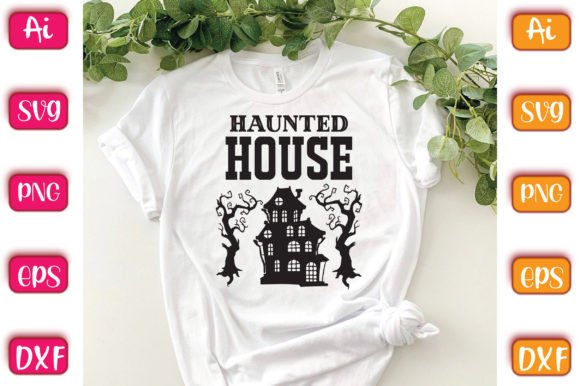
HAUNTED House Graphics for T-Shirt Designs
Downloading a new graphic design asset always carries a mix of anticipation and skepticism. As someone who builds seasonal product collections for Etsy, Creative Fabrica, and several print-on-demand storefronts, I need files that translate cleanly across physical products, digital downloads, and social media promotion. The HAUNTED House design landed in my workflow right when I was planning a Halloween mini-drop—prints, tees, and a few limited-run mugs—so I decided to test it thoroughly before commiting to any listing.
Right away, the downloaded folder delivered exactly what the product description promised: SVG, transparent PNG, EPS, DXF, and AI formats. That variety instantly widened the use case. You can feed the SVG straight into Cricut Design Space or Silhouette Studio, place the PNG on a high-resolution product mockup in Canva, drop the EPS into Illustrator for a packaging layout, or use the DXF if you have a customer asking for a laser engraving file. The file organization was clean, and each format opened without corruption—a relief when you’ve seen bloated, unsellable downloads before.
Visually, the design itself walks a clever line between eerie and playful. It’s not overly cute, but it also doesn’t tip into horror-gore territory that alienates broader audiences. The house silhouette carries enough gothic detail to feel premium on a dark crewneck, yet the line weights and negative spaces are balanced so the image holds shape even when scaled down for a planner sticker or a printable invitation. I could see this appealing to handmade business owners who run alternative boutiques, to content creators designing Halloween blog graphics, and to crafters who sell completed Cricut projects at local markets.
Testing Across Real Products Before Publishing
Before any digital product goes live in my shop, I run it through a quick “mockup gauntlet.” I loaded the transparent PNG onto a flat lay t-shirt mockup using a neutral grey background, then switched to a dark heather background, then to a white canvas tote. The illustration read clearly in all three environments, which is rare for assets that contain slender elements. The transparency around the image was pixel-perfect, so placing it onto a textured surface didn’t produce the dreaded white halo. Next, I pulled the SVG into Cricut Design Space and cut it on permanent vinyl with a medium cardstock setting as a test. The cut path rendered smoothly without excessive nodes that can snag or tear lightweight material. That’s critical information for anyone selling finished decals or heat-transfer vinyl merchandise.
I also mocked up a sublimation design on a ceramic mug and a tumbler wrap. The PNG resolution held fine at 300 DPI, which meant I didn’t need to upscale or convert the file awkwardly. For print-on-demand fulfillment partners like Printful or Printify, a 4000-pixel-wide PNG is typically enough for most standard print areas, and this graphic met that spec comfortably. The EPS file allowed me to expand the design slightly in Illustrator to fit a larger wall art print without losing edge quality—useful if you sell printable wall decor or oversized poster bundles.
Where This Graphic Really Delivers
The HAUNTED House design thrives in several product categories:
- T-shirt graphics for unisex and youth sizes, especially when placed as a left-chest print or a centered back hit.
- Mug designs where a wraparound print benefits from a continuous, moody silhouette.
- Printable wall art sold as instant download sets—pair it with a moon phase or bat graphic for a cohesive collection.
- Social media templates and blog post featured images during October. The eerie tone works well for content about fall recipes, décor, or storytelling.
- Sticker sheets when the design is scaled around 3 inches. Larger decals for laptops or car windows hold intricate gothic details perfectly.
- Digital paper packs and scrapbooking kits where a repeating motif or a topper element adds value.
One unexpected strength came from using the design as part of an invitation template suite. The AI file opened cleanly in Affinity Designer, and I was able to recolor the house in a deep plum and sepia combo. The Gothic aesthetic attracted customers looking for alternative wedding stationery or event graphics, not just Halloween theme park merch.
Watch Out for These Use Cases
No asset is universal. I learned quickly that the HAUNTED House illustration has limits you should anticipate:
- Tiny sticker details: When shrunk below 1.5 inches, some of the window pane lines start to fill in when cut with a blade that isn’t fresh. It’s better suited for stickers 2.5 inches and larger or for kiss-cut sheets where delicate cuts are not as critical.
- Low-resolution print products: If you’re selling through a marketplace that downscales uploads, double-check that the PNG you deliver remains crisp. Always provide a high-res file, not just a web-optimized version.
- Dark-on-dark apparel: While the design works on dark heather, a true black tee can swallow some of the shadowed areas. Consider offering a version with a subtle glow or a masking element if your customer base demands heavy contrast.
- Crowded thumbnails with text overlays: The intricate silhouette can become visually noisy when layered under bold type. If you’re using it as a background element, keep the central area clear or lower the opacity.
I also noticed that the DXF file had a slightly different grouping structure than the SVG when opened in CAD software. That didn’t affect laser engraving for me, but it’s worth a quick inspection if you rely heavily on DXF for cutting services.
Presentation Matters More Than the Design
We often judge a graphic design asset on its artistic merit, but in a commercial context, how you present it eclipses everything. I set up three different Etsy listing mockup styles using the same PNG file: a lifestyle photo with a model wearing the tee, a flat lay on a wooden desk, and a simple frame mockup for art prints. In each case, the visual hierarchy stayed intact because the illustration has a strong, centralized focal point. Product photography, even digital mockup photography, benefits from compositions where the eye lands immediately on the main subject.
For Canva template sellers, this translates into a powerful hero element. Place the HAUNTED House graphic at the top of an Instagram post template, and the mood is set instantly. Overlay a serif font for an elegant premium feel, or use a rough handwritten font for a distressed, vintage market vibe. I found that pairing it with a thin sans serif font in the listing title created a clean, modern contrast that made the product look more expensive. If you’re building a design bundle, combine this illustration with a script font for welcome signs, a display font for event posters, and a classic serif for thank-you tags. Consistency in typography across your collection amplifies trust and brand recognition.
Making It Work for Your Shop
Before you upload a single file for sale, test the asset as a thumbnail. Squint at the image from a distance. The house silhouette remained recognizable even when reduced to 200 pixels wide, which is essential for catching attention in a crowded marketplace. I also recommend placing the graphic on both light and dark backgrounds in your preview image carousel—shoppers need to see how the color palette (or lack of color, in this case) adapts to their chosen product.
From a licensing standpoint, confirm that the commercial license allows physical merchandise, digital end products for your customers, and use within templates sold on platforms like Creative Fabrica or Canva. I bundled the design into a seasonal collection alongside a lunar graphic, a spooky foliage set, and three coordinating fonts. That bundle now serves as both a standalone listing and a lead magnet for my newsletter, which in turn drives traffic to my print-on-demand apparel.
Here are a few seller notes worth keeping:
- Always test print colors with a proof on your home printer before offering printable wall art—the rich blacks can sometimes print heavier than expected.
- Check SVG cut quality on a sample before listing Cricut-ready blanks. The file performed well, but your machine's calibration may differ.
- Organize the final customer download folder into subfolders: SVG, PNG, EPS, DXF, AI. A messy zip file leads to refunds and confusion.
- Consider providing a quick placement guide or a size reference image to improve the buyer experience and reduce returns.
For small business branding, this graphic can also pull double duty beyond individual products. Use it as a temporary profile picture on your shop’s social media during October, or incorporate it into packaging materials like thank-you cards and invoice inserts. A cohesive visual identity, however seasonal, contributes to long-term customer retention.
Is It Worth Adding to Your Commercial Arsenal?
After a full week of testing across multiple product lines, the HAUNTED House graphic earned a permanent spot in my seasonal resource folder. It’s not overly niche—if you can imagine a market that blends a touch of macabre with everyday crafts, this fits. The file quality is reliable, the versatility across SVG and PNG formats covers everything from Cricut projects to sublimation designs, and the visual impact on mockups consistently elevates product previews.
For Etsy sellers, it provides a low-risk way to expand a Q4 product lineup. For print-on-demand merchants, it translates easily into sellable merchandise without complex text manipulation. And for crafters and content creators, it offers a visual anchor that works across printable designs and promotional visuals alike.
In a creative marketplace saturated with generic pumpkin and ghost vectors, an asset that feels more built than drawn—more curated than cobbled—can separate your listings from the noise. That’s exactly where this HAUNTED House digital download delivers.