Favorite Gigi, Love You Gigi SVG
A Designer’s First Look: Warm, Whimsical, and Ready for Real Stitching
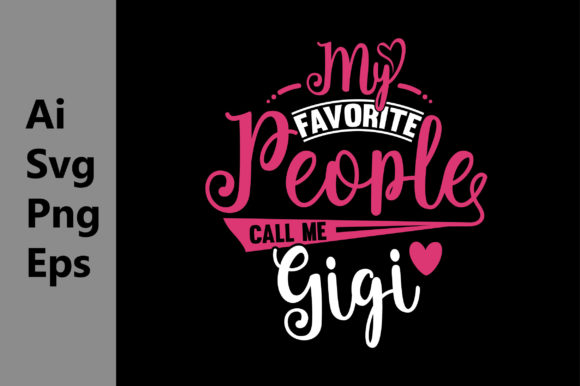
When I opened Favorite Gigi, Love You Gigi SVG, the first thing that struck me wasn’t just the sentiment—it was the balance. The script flows like a handwritten note passed between generations: soft curves, gentle spacing, and a lightness that avoids looking cutesy or cluttered. As an embroidery designer who’s stitched hundreds of “Grandma,” “Nana,” and “Gigi” designs for baby blankets, aprons, and boutique sweatshirts, I appreciate how this one leans into warmth without leaning too hard. It feels personal—not generic. That matters when you’re building trust with customers who buy handmade products as keepsakes, not commodities.
Where This Design Truly Shines in Real Projects
I recently prepped a batch of organic cotton tote bags for a local mom-owned gift shop—each one embroidered with a different generational nickname. Favorite Gigi, Love You Gigi SVG landed on the front of a cream linen-blend bag, stitched in soft heather gray thread. It read clearly at 3.5 inches wide, held its shape across the fabric’s subtle texture, and looked intentional—not slapped on. That’s the sign of a well-considered design asset.
It works especially well for:
- Baby embroidery — Think onesies, burp cloths, or nursery pillow covers where legibility and tenderness matter more than flash.
- Sweatshirt embroidery — The open letterforms breathe on fleece and French terry, avoiding dense fill-stitch buildup that can stiffen seams.
- Embroidered patch — Clean outlines and moderate height make it ideal for iron-on or sew-on patches on denim jackets or backpacks.
- Holiday embroidery — A sweet addition to Christmas stockings, Easter towels, or Mother’s Day tea towels—especially when paired with simple botanical accents.
- Small shop product — Its emotional resonance helps Etsy sellers stand out in search results for “Gigi gift” or “grandmother embroidery,” without relying on overused clipart motifs.
What to Watch For Before You Stitch
This isn’t a “set and forget” embroidery file. Like any thoughtful machine embroidery design, it rewards attention to context. Here’s what I check every time:
- Fabric texture — On highly textured fabrics like bouclé or thick terry cloth, the finer script details (especially the tail of the “y” in “Love You”) may soften. Test on scrap first—and consider simplifying the lower loop if stitching for a high-wear item like a kitchen towel.
- Stabilizer choice — Lightweight cutaway works best for knits and stretchy fabric; tear-away is fine for stable wovens like quilting cotton or canvas. Skip basic fusible web—it won’t support satin-stitch curves cleanly.
- Thread color contrast — The design’s charm relies on readability. On dark fabric, avoid pale pastels. Navy thread on charcoal sweatshirts? Yes. Light yellow on black? Not unless you add an underlay stitch or switch to a bold outline.
- Hoop size & placement — At full scale (roughly 4–4.5 inches tall), it needs at least a 5x7 hoop. Don’t force it into a 4x4 for a cap front—that curvature distorts the letter spacing. Save it for flat or gently curved surfaces: tote straps, pocket flaps, or pillow centers.
- Wash durability — Dense satin-stitch areas (like the inner curve of the “G” in “Gigi”) hold up well—but avoid placing those zones directly over seam allowances or high-friction spots like bag handles.
How It Shapes Customer Perception—and Your Brand
When a customer sees Favorite Gigi, Love You Gigi SVG on your finished product, they don’t just see text. They see care. They see intentionality. That translates directly into perceived value—especially for personalized gifts and custom apparel. I’ve watched buyers linger longer on listings featuring this kind of emotionally grounded digital embroidery file, then convert at higher rates than those using overly ornate or cartoonish alternatives.
For craft business owners, it supports brand consistency: warm but not saccharine, modern but timeless, feminine without being fussy. It fits seamlessly into collections alongside minimalist floral borders or monogrammed initials—never competing, always complementing.
Practical Notes Every Embroidery Designer Should Keep Handy
Before adding Favorite Gigi, Love You Gigi SVG to your workflow, do these five things:
- Test on scrap fabric — Run it at your intended size and stitch density. Check for skipped stitches in tight curves and thread breaks in long satin runs.
- Review stitch density — If your machine struggles with dense fills, reduce density slightly in vector-editable formats (AI/EPS) before digitizing—or ask your digitizer to optimize for your fabric type.
- Confirm licensing — The listing says “We are always making new,” but doesn’t specify commercial use rights. Verify whether resale of finished embroidered items is permitted before listing on Etsy or wholesale platforms.
- Compare light/dark backgrounds — Use a printable mockup to preview how the design reads on both white and navy tees. Adjust thread weight or add subtle shadowing if needed.
- Check small details in black-and-white — Print a 1:1 grayscale version. If letters blur or merge, re-scale before stitching—especially important for baby embroidery where clarity equals safety and sentiment.
Final Thought: A Design That Feels Like a Handwritten Note
Favorite Gigi, Love You Gigi SVG isn’t flashy—but it doesn’t need to be. In a market flooded with oversized fonts and glitter effects, its quiet confidence stands out. It’s the kind of T-Shirt Designs graphic that earns repeat orders from boutique owners and heartfelt thank-you notes from grandmothers receiving their first embroidered apron. Used thoughtfully—with attention to fabric, stabilizer, and scale—it becomes more than a Graphics file. It becomes part of someone’s story. And that’s the mark of a truly working design.